Your Cart
You are €150 away from free standard shipping.
Your cart is empty
You are €150 away from free standard shipping.
We cover all U.S. tariffs, so you won’t pay extra customs fees.
Most people only see the finished garment — a linen dress, shirt, or pair of pants. What often goes unnoticed is how many people, processes, and decisions are involved before the fabric ever reaches a sewing table.
During our years working with linen, we have had the opportunity to visit the mill that produces the fabric we use and witness parts of the process firsthand. Most people only see the finished garment, but every piece begins its journey much earlier.
In this article, we’ll take a look at some of the steps that happen before linen reaches our studio. From color development and weaving to inspection and finishing, every stage plays a role in creating the final fabric.
Understanding this process helps explain why linen remains such a valued fabric. It also shows how much work goes into producing high-quality linen.
We source all of our linen locally in Lithuania, where linen production has been part of the country’s textile industry for generations. If you’d like to learn more about the history and characteristics of European linen, you can read our guide to European linen. Working with local suppliers allows us to stay closely connected to the fabric we use and gives us a better understanding of how it is made.
During our 12 years working with linen, we have visited the mill that produces our fabric many times. While customers usually see only the finished garment, every piece starts its journey much earlier. Before a linen dress, shirt, or pair of pants reaches our studio, countless people have already contributed to its creation.
The process begins with a single thread and continues through weaving, dyeing, softening, inspection, and many other stages before the fabric is ready to become clothing.
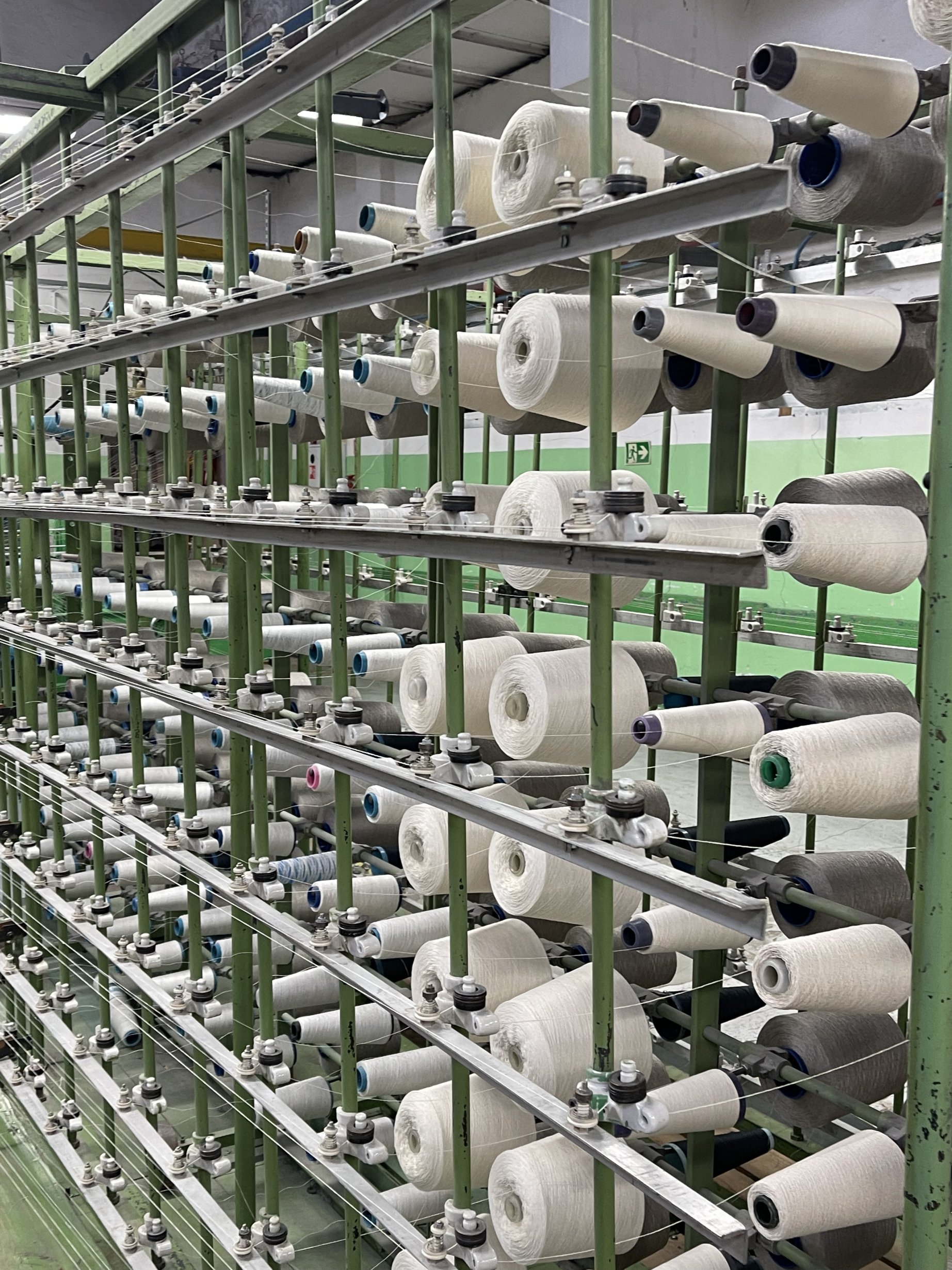
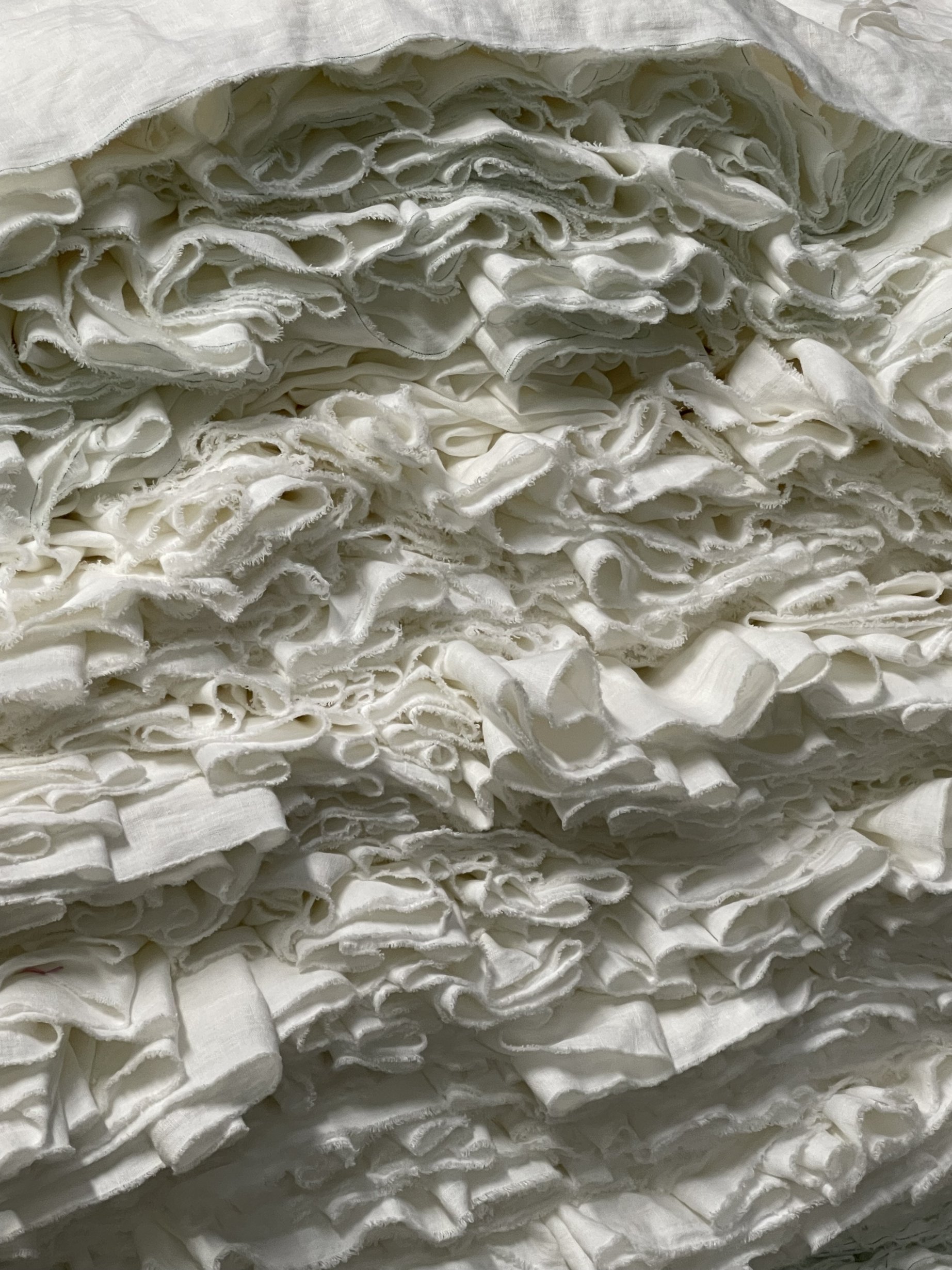
Modern machines play an important role in linen production, but every stage still relies heavily on human expertise. The machinery makes the process more efficient, but people still monitor quality and oversee every stage of production.
One of the most fascinating aspects of linen production is how many individual threads come together to form a single piece of fabric. Every thread must be positioned correctly and woven into place with precision. Even with advanced technology, creating high-quality linen still requires years of knowledge and attention to detail.
When visiting the mill, it becomes clear how much work goes into a fabric that many of us take for granted. What looks like a simple fabric actually requires a highly coordinated process involving both machines and skilled professionals.
One of the parts people rarely think about is color development. Before a new linen color reaches our collection, specialists spend time developing and refining the exact shade used to dye the fabric.
When we decide to introduce a new color, we send our reference to the mill. From there, the process of color matching begins. The specialists test different combinations until they achieve the desired shade.
Achieving the right color is often far more complex than it seems. A shade can look different depending on the fiber, washing process, or lighting conditions. Creating a color that remains consistent across production batches requires both technical knowledge and experience.
Developing a new linen color often takes longer than people expect.
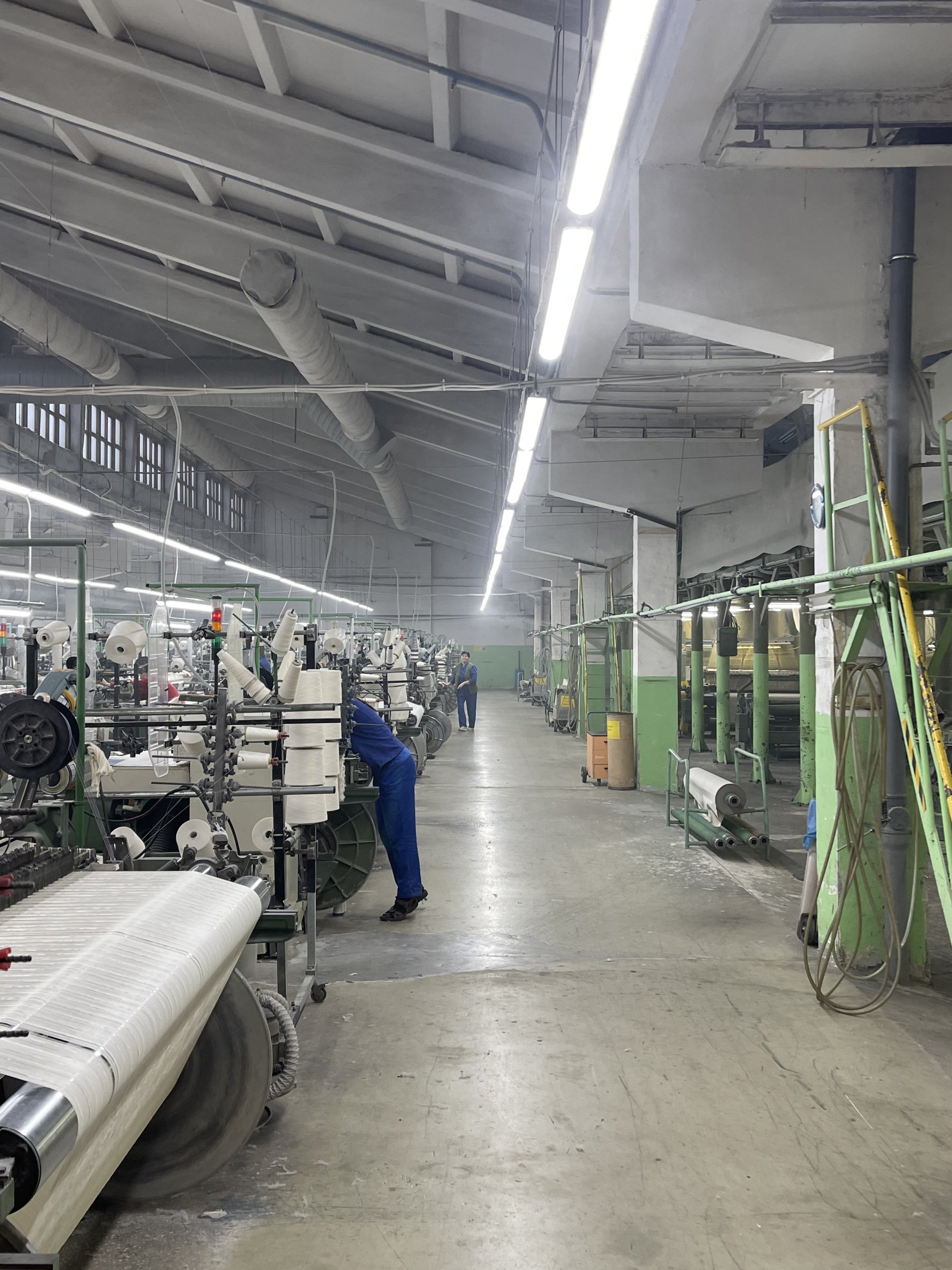
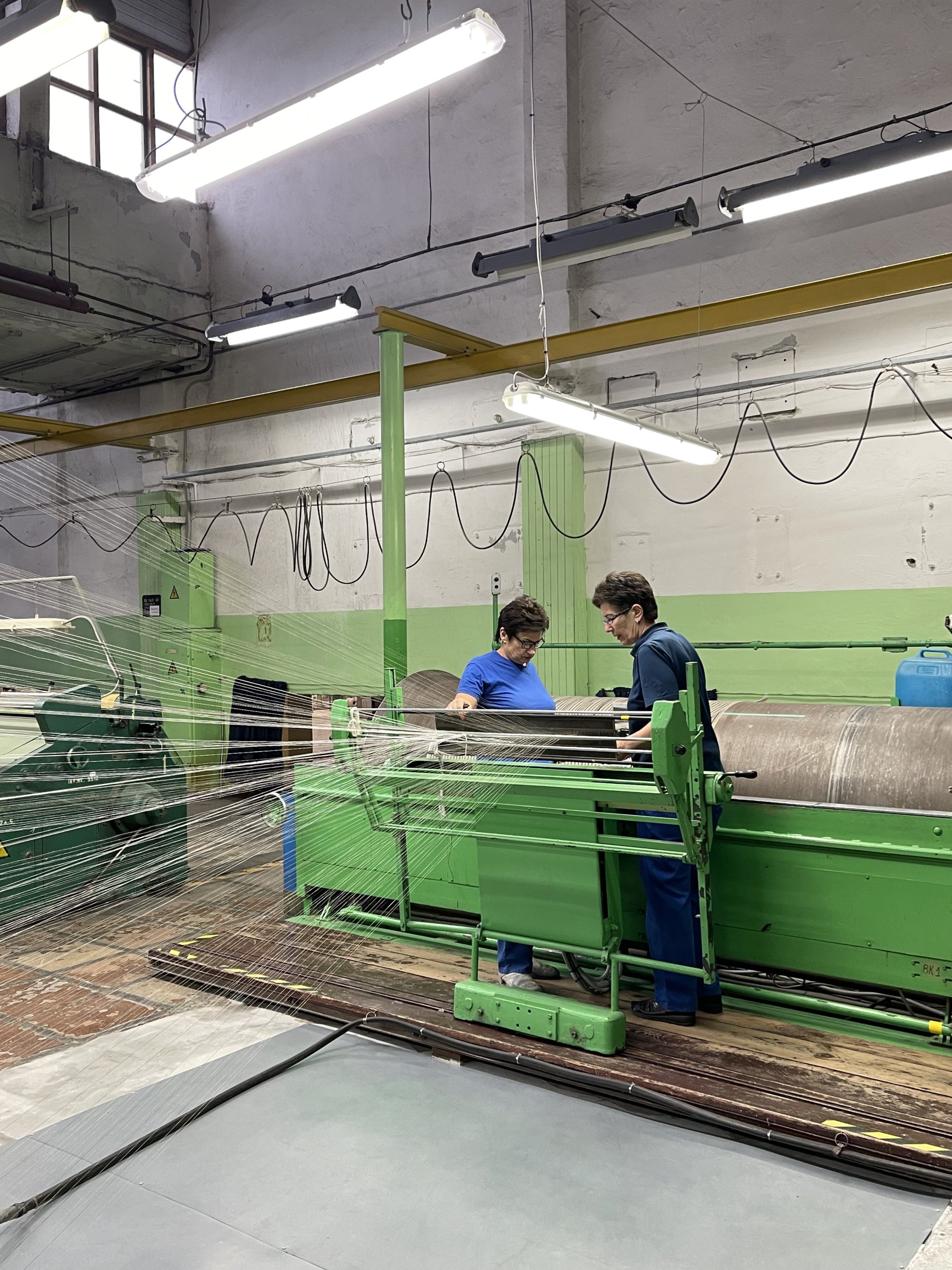
Once the threads are prepared, the weaving process begins. This is the stage where thousands of individual threads are interlaced to create the linen fabric itself.
Watching the weaving machines in operation is impressive, but it also highlights the level of precision required. Every thread must be positioned correctly and maintained under proper tension throughout the process. Even small irregularities can affect the final fabric.
Although modern equipment has improved efficiency, producing quality linen still depends on constant monitoring and adjustments. The goal is not simply to produce fabric, but to produce linen that meets the standards needed for high-quality garments.
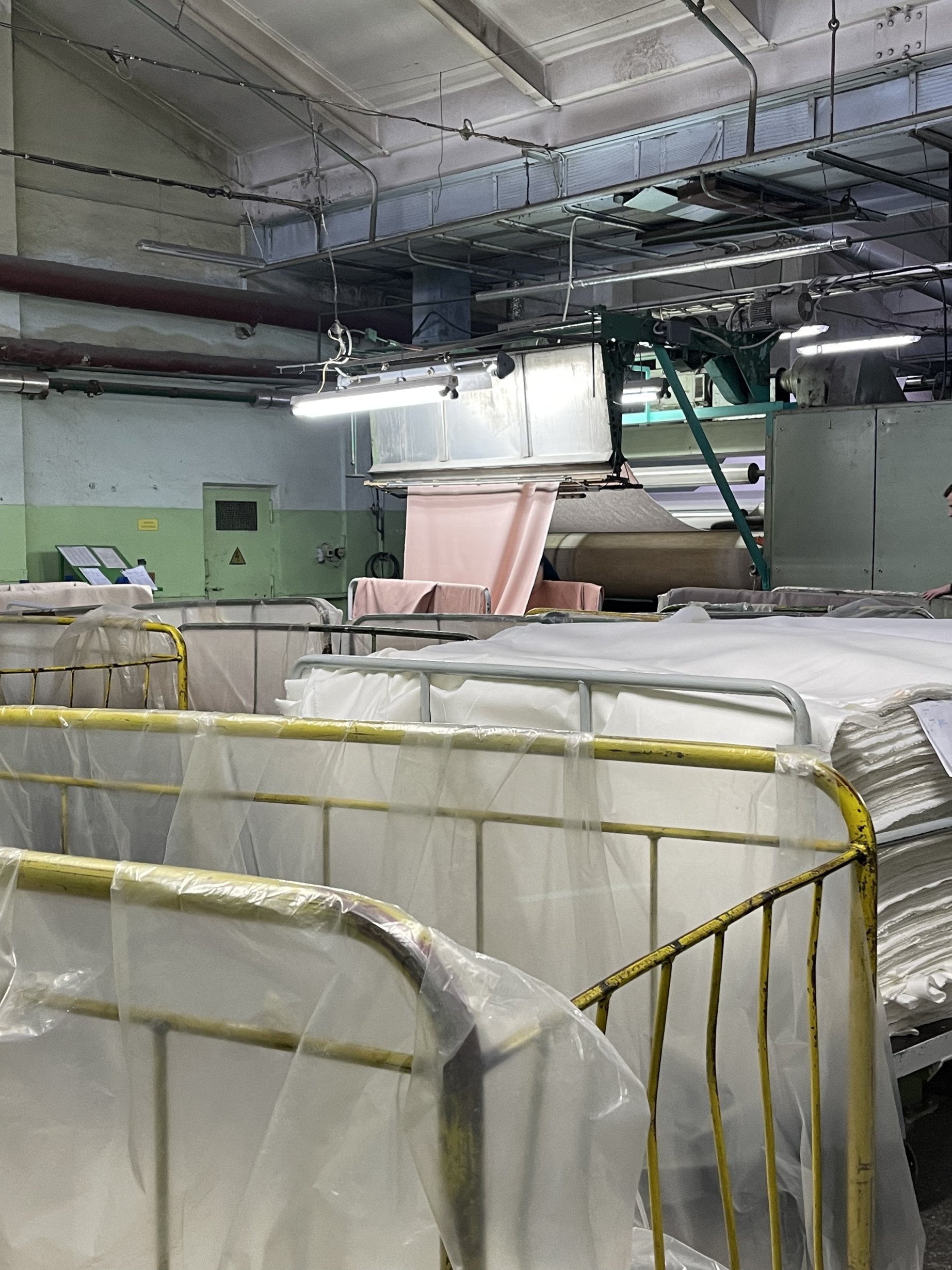
The linen we use is OEKO-TEX Standard 100 certified. This certification helps ensure that the fabric has been tested for substances that could be harmful to people or the environment.
Choosing certified fabric has always been important to us. We want every garment to be made from materials that meet strict safety standards while also supporting a more responsible production process.
Running a small business while maintaining these standards is not always the easiest path. However, transparency has always been one of our priorities. We believe customers deserve to understand not only where their clothing comes from, but also what goes into making it.
After the fabric has been woven, dyed, and softened, the quality control process begins.
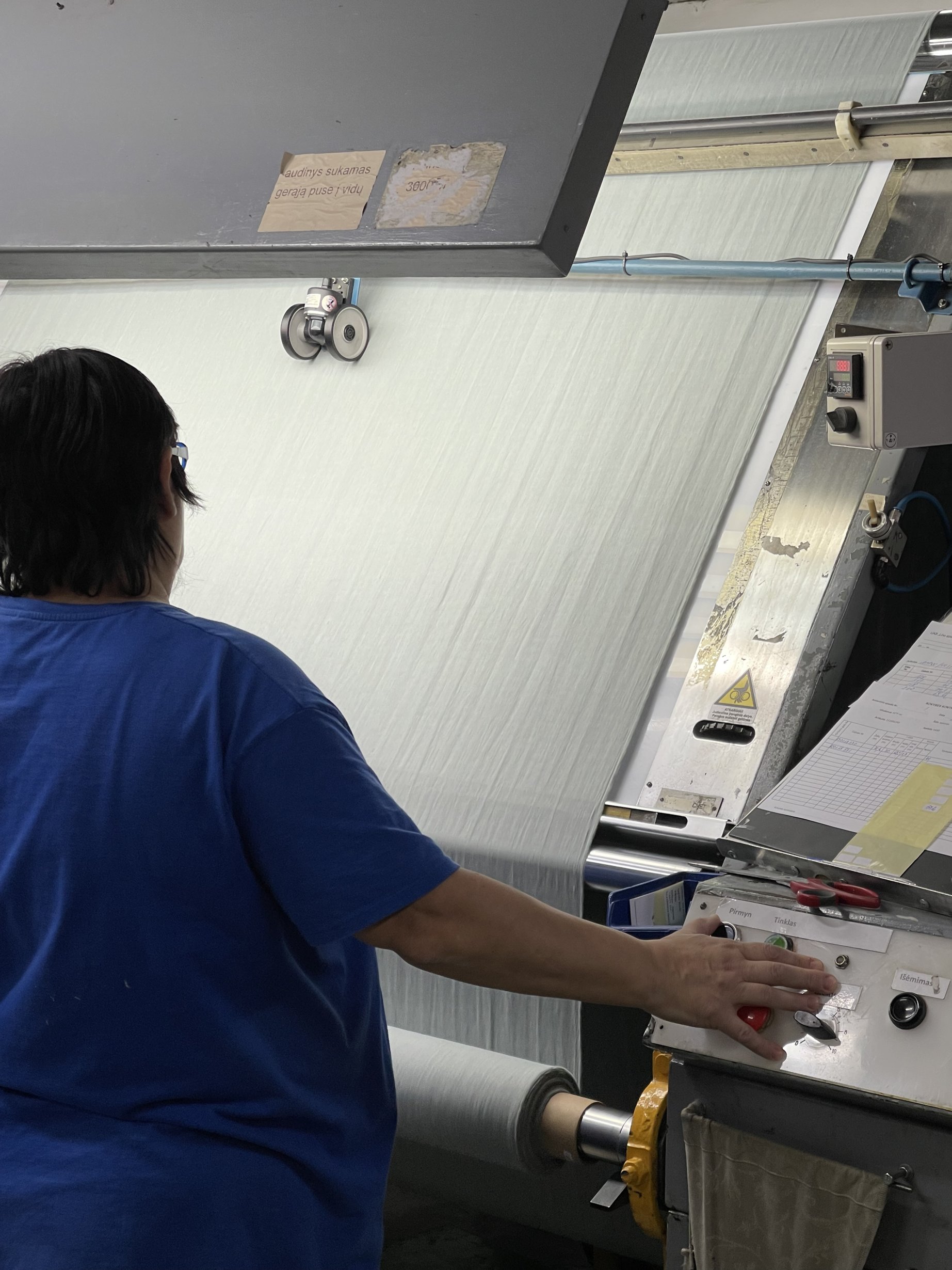
One detail that often surprises people is that every meter of fabric is inspected by a person. The fabric passes through inspection stations where specialists carefully examine it for weaving irregularities, color inconsistencies, or any other imperfections.
Over the years, we have witnessed this process many times, and it remains one of the most impressive parts of fabric production. The level of concentration required is remarkable. Every roll is reviewed carefully before it can move on to the next stage.
This final inspection helps ensure that the fabric arriving at our studio meets the quality standards we expect for every Linenfox garment.
Depending on the intended use, linen can be woven and finished in different ways. We cover the most common options in our guide to different types of linen fabric.
The finished linen is delivered to our studio, where it is transformed into linen clothing for women, including dresses, shirts, pants, skirts, jackets, and other garments. Patterns are prepared, fabric is cut, pieces are sewn together, and every garment goes through multiple quality checks before it is packed for shipment.
Looking back, it is easy to focus only on the finished piece hanging in a wardrobe. Every linen garment starts long before the fabric reaches our studio.
This is only a small part of the linen-making process. Even so, we hope it provides a better understanding of what happens before the fabric reaches our studio.


