Your Cart
You are €150 away from free standard shipping.
Your cart is empty
You are €150 away from free standard shipping.
We cover all U.S. tariffs, so you won’t pay extra customs fees.
Lithuania has a long connection with linen. It can still be found in old family photographs, traditional textiles kept in homes and stories passed down by parents and grandparents. For some, the memories of working in flax fields are not even that distant.
Today, linen remains an important part of Lithuania’s textile identity, although the industry behind it looks very different from the one previous generations knew.
As a linen clothing brand based and producing in Lithuania, this history feels particularly close to us. We wanted to look beyond the finished fabric and trace the story of Lithuanian linen through the people who grew it, processed it and wove it – and how that story continues today.
Linen has been part of life in Lithuania for centuries, long before textile production moved into factories. Flax was grown locally, while its fibre was spun and woven at home into cloth used for clothing, bedding, towels and other household textiles.
For many families, working with flax was simply part of rural life. Growing the plant was only the beginning. People pulled flax from the ground, dried it and processed it before spinning the fibres into yarn. Traditionally, families wove linen at home on wooden looms, passing the knowledge of turning flax into cloth from one generation to another.
By the 16th century, weaving had also developed beyond the household. Weaving workshops appeared in Lithuanian towns, producing fabrics not only for clothing but also for table linens, bed textiles, towels and decorative pieces. Over the following centuries, textile production gradually became more organised, eventually laying the groundwork for a larger linen industry.
What makes this history especially interesting is how recently some of these older ways of working with flax were still part of everyday life. For many Lithuanian families, they are not distant stories found only in museums. They remain within living memory.
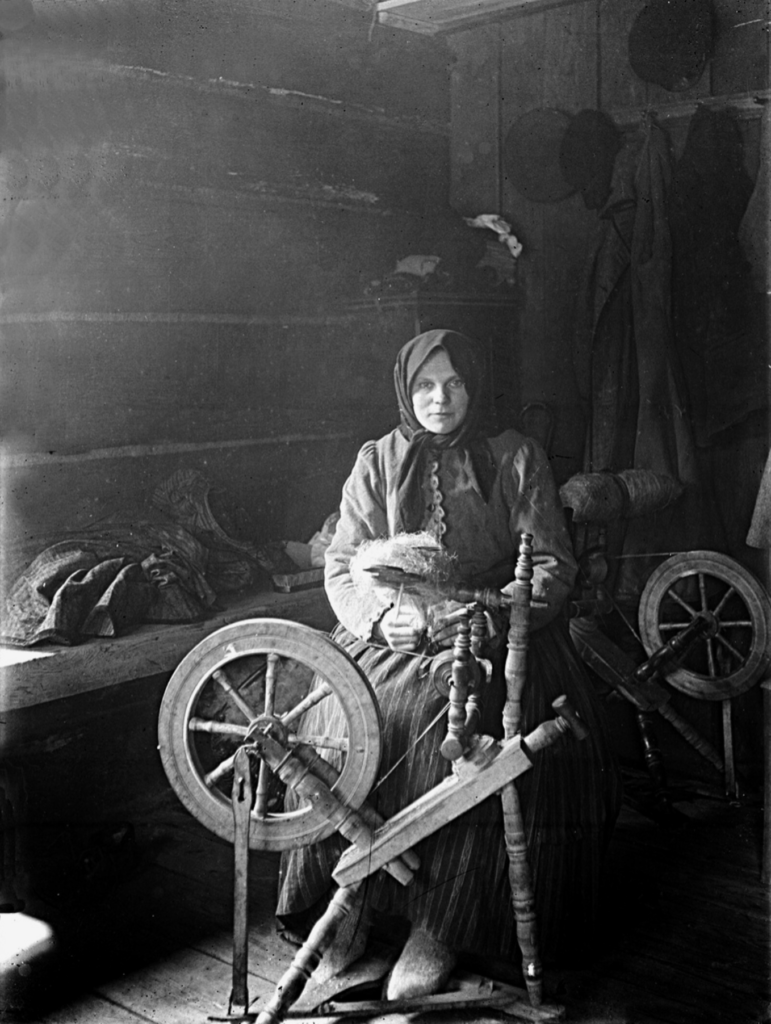
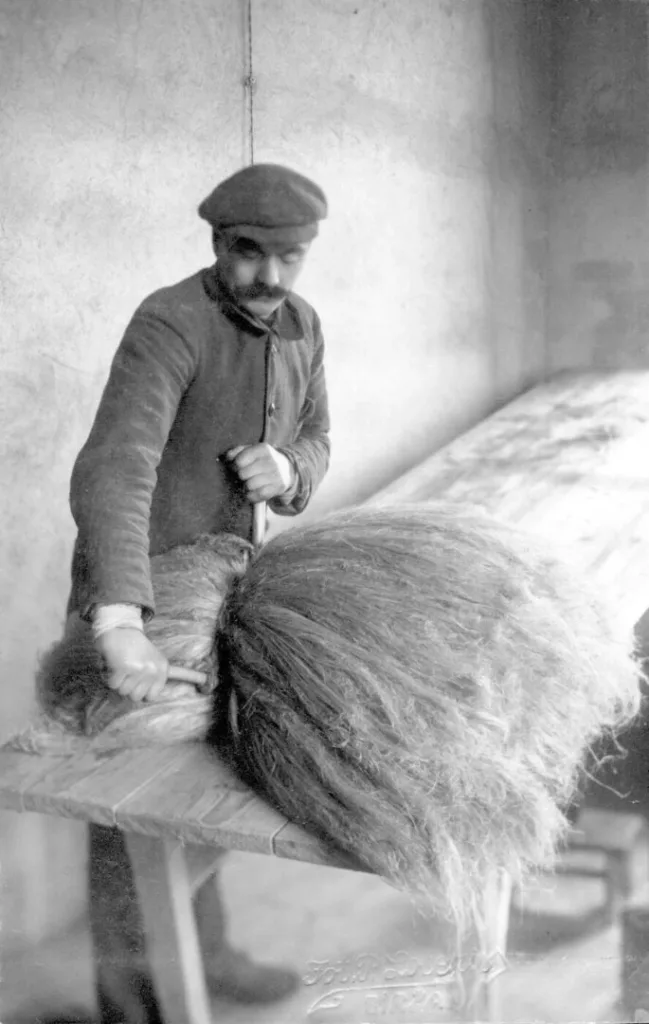
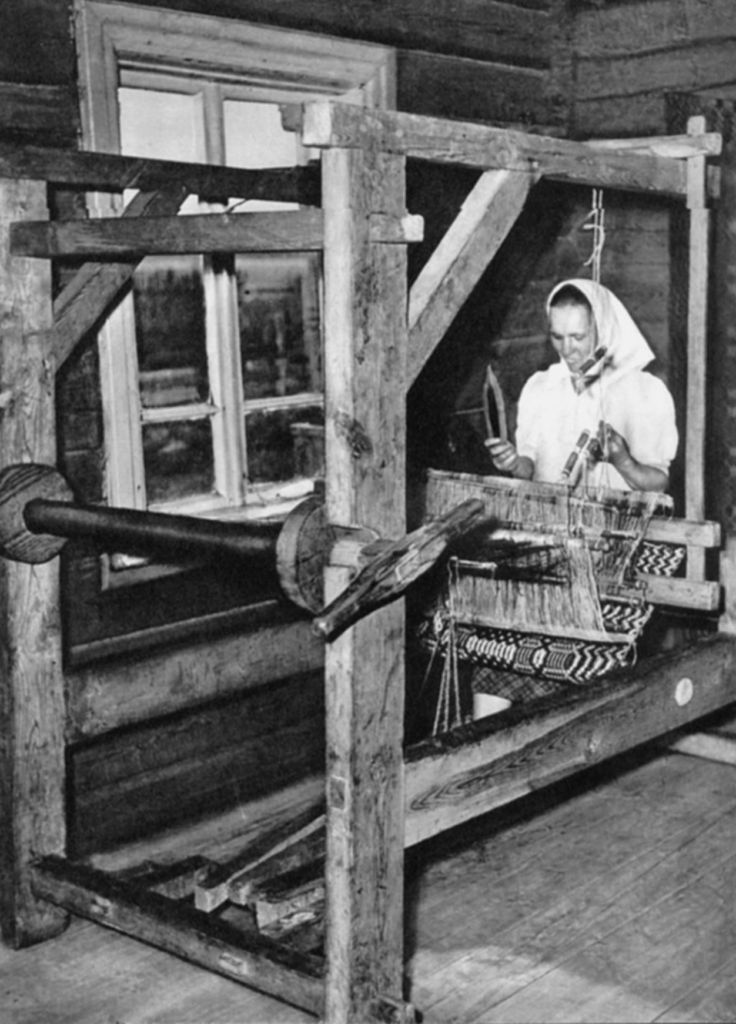
For older generations in Lithuania, flax was not simply a fabric or an agricultural crop. Growing and harvesting it meant long days of physical work, and some of those memories are still surprisingly recent.
One of them comes from our own family. My husband’s mother is 63 today, and she still remembers pulling flax by hand while she was at school. Each child had to complete a certain amount of work. They pulled the flax from the ground by hand, gathered it into bundles and left them standing in the fields. Later, horses and carts collected the bundles.
She remembers the work as incredibly hard. There were no gloves or protective clothing, and by the end of the day her arms could be scratched all the way up to the elbows.
But that is only one part of what she remembers.
The work was shared with school friends, family and other people from the community. There was talking and singing while they worked, and simple meals eaten together in the fields – bread, homemade cheese and jam. It did not make the work easier, but it made those long days something people experienced together.
It is easy to think of traditional flax growing as something belonging to a distant past. Yet in Lithuania, memories like these still belong to people around us today.
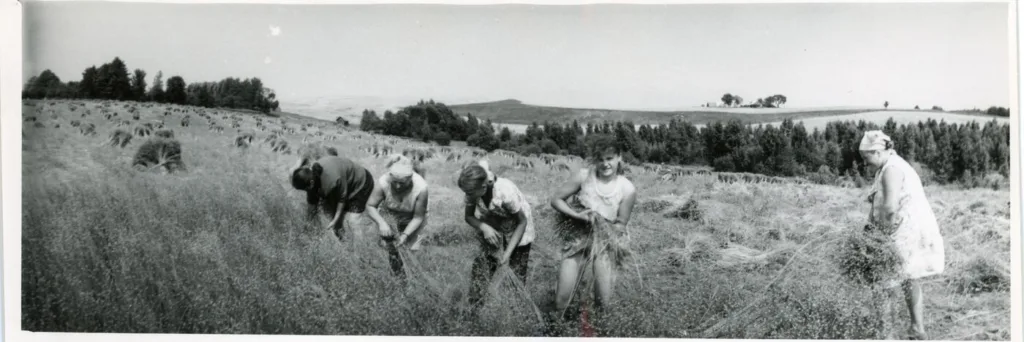
Pulling flax from the ground was only the beginning. Turning the harvested plant into linen cloth required several more stages, and people traditionally completed much of this work by hand.
Unlike many crops, farmers pulled flax from the ground rather than cutting it. This helped preserve the full length of the stem and its valuable fibres. After harvesting, they dried the plants and prepared them for retting – a process that helped separate the fibres inside the stem from the woody parts surrounding them.
The dried stems then had to be broken and cleaned to release the long flax fibres. These fibres were combed, arranged and eventually spun into yarn. Only then could the yarn reach the loom and begin its transformation into linen cloth.
Each stage required time and skill. What began as a plant growing in a field passed through many hands before becoming the smooth woven fabric used in homes and clothing.
The tools and scale of production would eventually change dramatically. Over time, linen production moved from homes and manual work to specialised workshops and factories, opening a new chapter in Lithuania’s relationship with linen.
By the beginning of the 20th century, flax was no longer only part of household textile making in Lithuania. It had become an important agricultural crop and a valuable export, while linen processing was gradually moving towards larger-scale production.
During the interwar period, Lithuania became a significant exporter of flax fibre. In 1938 alone, the country exported around 19,000 tonnes of flax fibre. Processing facilities expanded too, creating a growing link between flax grown in the countryside and an increasingly organised textile industry.
This development continued during the Soviet period, although under a very different economic system. Flax processing became increasingly industrialised, with specialised factories handling work that previous generations had done largely by hand. By the late 1980s, more than 2,300 people worked in Lithuania’s flax processing factories.
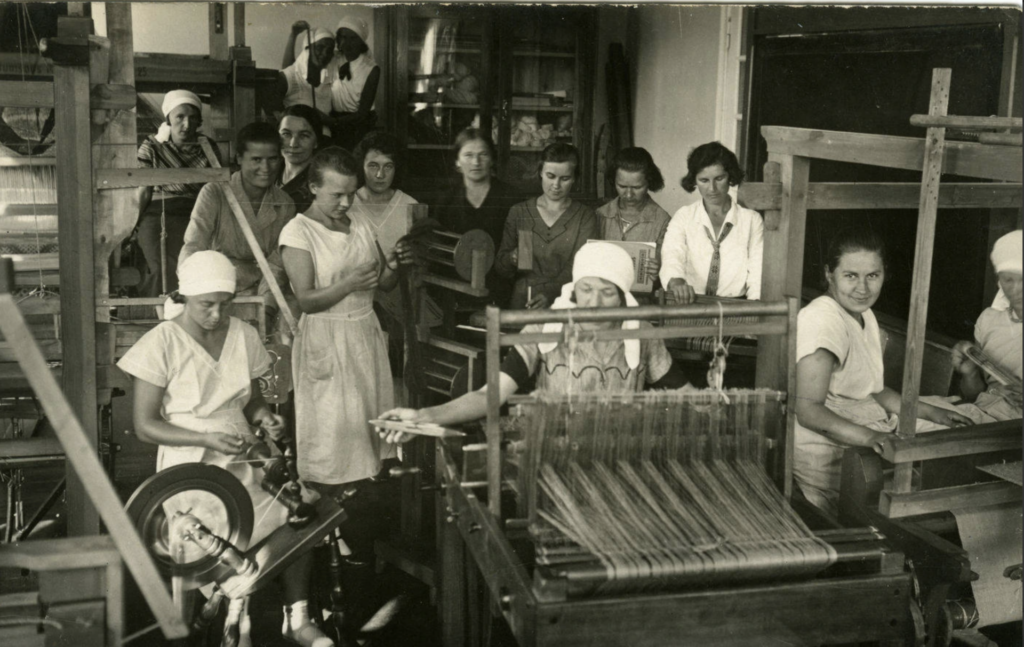
The linen industry that once operated on such a large scale in Lithuania did not remain unchanged. After the restoration of independence in 1990, the agricultural and industrial systems surrounding flax began to shift. Flax-growing areas declined, and many of the facilities that had processed locally grown flax eventually closed.
The change was significant. In 2006, seven primary flax processing companies were still operating in Lithuania. By 2012, only one remained. Over time, commercial flax growing and primary fibre processing largely disappeared from the country.
But Lithuania’s connection with linen did not disappear with the flax fields.
The textile industry continued to evolve. Lithuanian manufacturers increasingly sourced linen yarn and fibre from elsewhere in Europe, while weaving, finishing, sewing and other stages of textile production continued in Lithuania. This distinction remains important today: making a linen fabric or garment in Lithuania does not necessarily mean that its flax grew here.
In many ways, this reflects how the European linen industry works today. Different stages of the journey from flax plant to finished garment can take place in different countries, while Lithuania remains home to textile manufacturers, sewing studios and generations of people with experience working with linen.
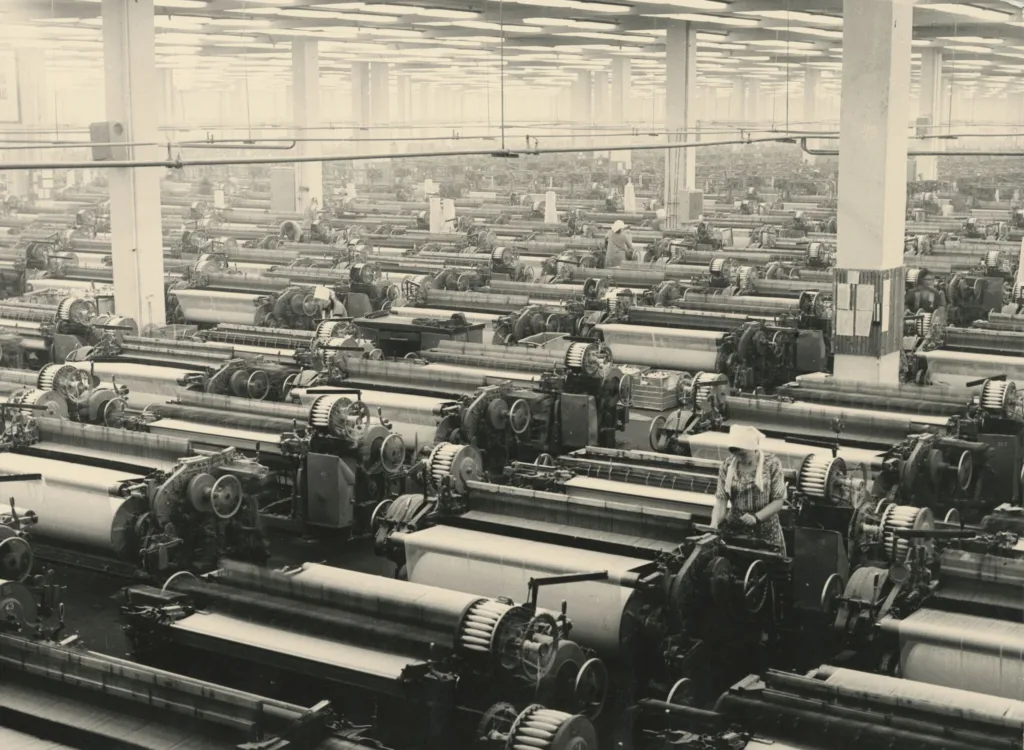
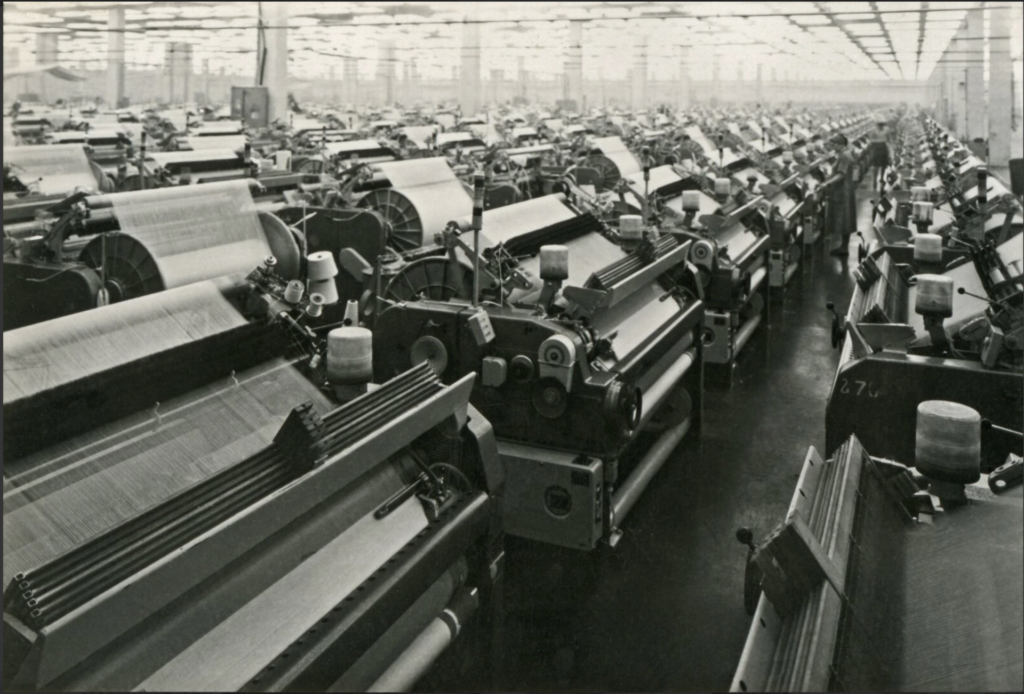
Today, Lithuanian linen tells a different story from the one seen in old photographs of flax fields and large processing factories. Lithuania no longer grows flax on the scale it once did, but the knowledge and infrastructure needed to turn flax fibre into linen fabric remain.
The linen used at Linenfox begins with flax grown elsewhere in Europe. The raw material then comes to Lithuania, where it is spun into yarn and woven into fabric by local mills. From there, the fabric continues its journey through cutting, sewing and finishing before becoming a garment.
This distinction matters. When we talk about Lithuanian linen today, it does not necessarily mean that the flax plant itself was grown in Lithuania. In our case, it describes a textile whose raw material comes from Europe, while the transformation from fibre to yarn, from yarn to fabric, and eventually from fabric to clothing takes place here in Lithuania.
The process looks very different from the flax fields remembered by previous generations, but surprisingly many stages of the journey still happen close to home. What once began with locally grown flax now begins with European raw material, while spinning, weaving and garment making continue the textile knowledge that has existed here for generations.
At our studio in Lithuania, linen fabric passes through many hands before becoming a finished garment. Each piece is cut, sewn, finished and checked by people who work with linen every day. You can take a closer look behind the seams at our studio to see how this process works today.
Looking back at these photographs makes that connection feel especially close. Within just one generation, our family has gone from memories of pulling flax by hand in the fields to working with linen in a completely different way today.
Perhaps that is what makes the story of Lithuanian linen so interesting. It is not a tradition preserved exactly as it once was. It has changed with agriculture, industry and the people working within it – and it continues to change today.
Yes. Lithuania still has mills and manufacturers working with linen. At Linenfox, we use European-grown flax that comes to Lithuania as raw material. Lithuanian mills spin it into yarn and weave it into linen fabric before our studio cuts and sews the fabric into clothing.
Not necessarily. Today, the term Lithuanian linen does not always mean that the flax itself was grown in Lithuania. In the case of Linenfox, the flax comes from elsewhere in Europe, while spinning, weaving and garment production take place in Lithuania.
Flax has a long history in Lithuania and was once an important agricultural crop and export. Linen was woven in homes for generations before production expanded into mills and factories. Although flax growing has declined, linen remains closely connected with Lithuania’s textile industry.
European linen generally refers to linen connected to European-grown flax and its European production chain, while Lithuanian linen describes linen associated specifically with production in Lithuania. The exact origin and manufacturing stages can vary, so it is worth checking where producers grow the flax, spin the yarn, weave the fabric and make the finished product.


