Your Cart
You are €150 away from free standard shipping.
Your cart is empty
You are €150 away from free standard shipping.
We cover all U.S. tariffs, so you won’t pay extra customs fees.
Is linen breathable? Yes — its structure allows heat and moisture to escape faster than many other fabrics. Breathability depends on how a fabric handles air, heat, and moisture, not just how light it feels.
In this guide, we explain how linen works, why it feels different from other fabrics, and when linen performs best.
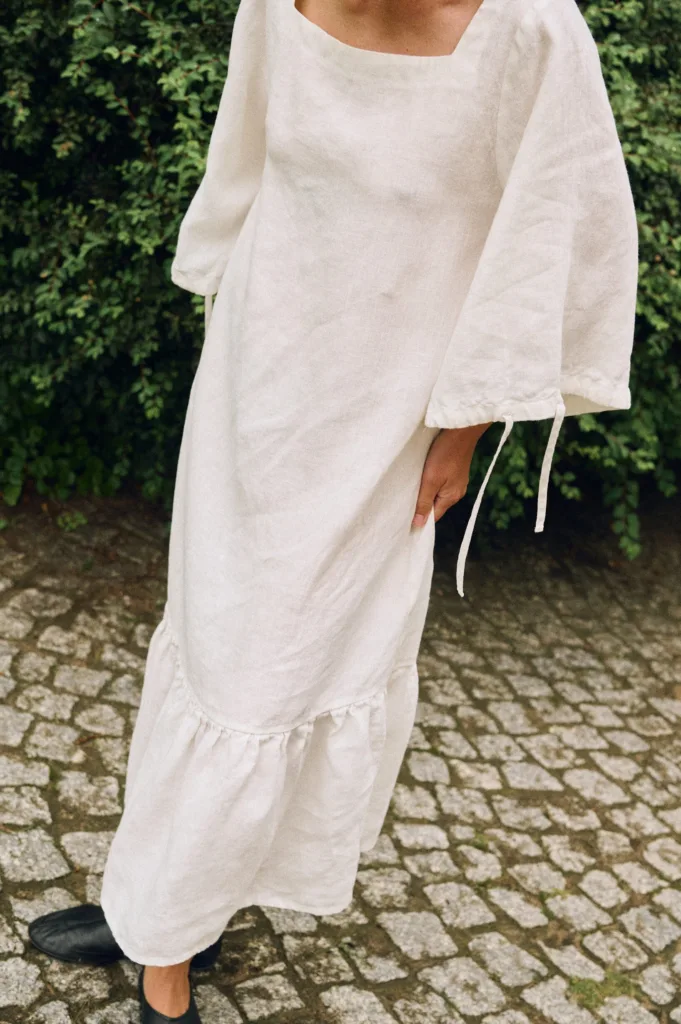

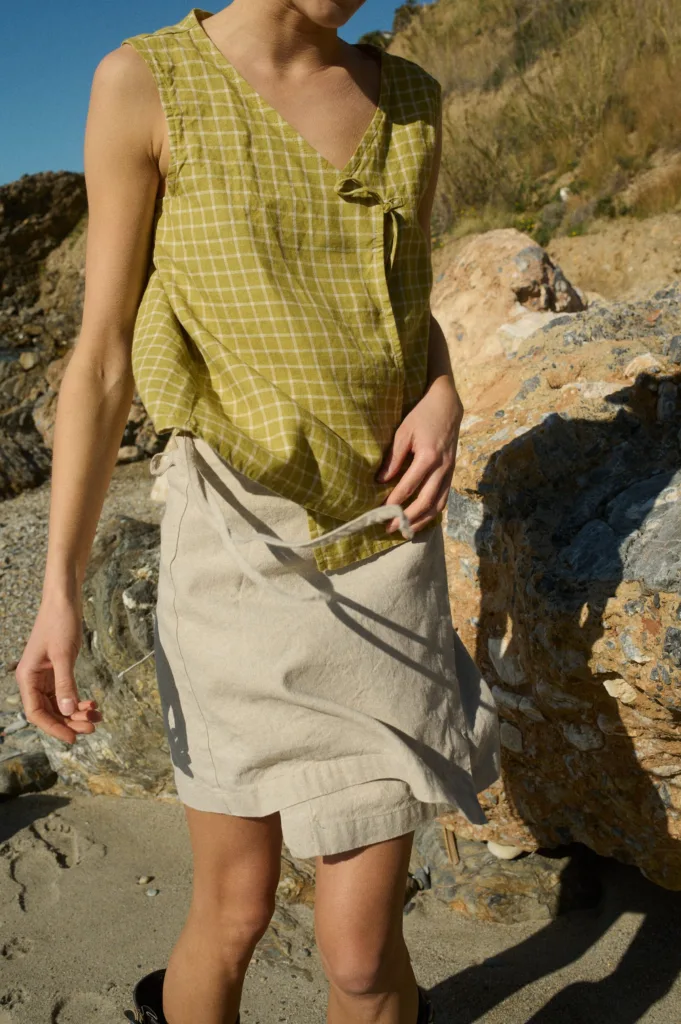
Linen is breathable because of both its fiber structure and the way the fabric is constructed.
Flax fibers, from which linen is made, are naturally thicker and less uniform than cotton fibers. Under magnification, they appear slightly irregular and contain microscopic gaps along the fiber surface. When these fibers are woven into fabric, they do not pack tightly together. Instead, they create a more open structure that allows air to circulate more freely.
This airflow is a key factor in thermal regulation. Studies on textile performance show that fabrics with higher air permeability allow heat to dissipate more efficiently, reducing the buildup of warmth between the fabric and the skin.
Linen also has relatively low elasticity compared to many other fibers. Because it does not stretch and cling to the body, the fabric tends to sit slightly away from the skin. This creates a small air layer between the garment and the body, which further improves ventilation.
Another important factor is the surface texture. Linen fibers have a natural stiffness and do not form a smooth, flat surface. This subtle texture reduces the contact area with the skin, which helps minimize the sensation of heat and allows moisture and air to move more easily.
Together, these structural properties — open weave, low elasticity, and textured fiber surface — explain why linen consistently performs well in warm conditions.
Breathability alone does not define comfort in warm conditions. Moisture management plays an equally important role, and this is where linen performs particularly well.
Linen fibers are hydrophilic, meaning they can absorb moisture from the skin. However, unlike many other fabrics, linen does not hold that moisture for long. The fiber structure allows water to spread quickly across the surface and evaporate into the air.
This process is often described as moisture wicking and rapid drying. Instead of trapping sweat between the fabric and the skin, linen helps move it away and release it, which reduces the feeling of dampness.
At the same time, evaporation has a cooling effect. As moisture leaves the fabric, it draws heat away from the body. This is why linen often feels more comfortable in hot or humid environments compared to fabrics that retain moisture.
Fabric weight and weave also influence this behavior. Lightweight linen allows faster evaporation, while heavier linen absorbs more moisture before releasing it. Both can be effective, but they create slightly different sensations on the body.
Because of this balance between absorption and evaporation, linen helps maintain a more stable microclimate between the fabric and the skin, even in changing temperatures.
Breathability is often discussed across different fabrics, but not all materials manage heat and moisture in the same way. Linen, cotton, and synthetic fabrics each behave differently due to their fiber structure.
Linen stands out for its ability to combine airflow with quick moisture release. Its fibers create a more open fabric structure, allowing heat to escape while helping moisture evaporate efficiently. This results in a dry, stable feel even in warm or humid conditions.
Cotton is also a natural fiber and allows air to pass through the fabric. However, it tends to absorb and retain moisture for longer periods. As a result, cotton can feel heavier or damp when exposed to heat or sweat, especially during extended wear.
Synthetic fabrics, such as polyester or nylon, are typically less breathable. Their fibers are smoother and more uniform, which limits airflow. Many synthetic materials are designed to wick moisture, but they often trap heat, creating a warmer microclimate between the fabric and the skin.
Because of these differences, linen tends to feel more balanced over time. It does not trap heat like synthetics, and it does not hold moisture as long as cotton. This combination makes it particularly suitable for warm weather and environments where both airflow and dryness matter.
Linen is often associated with a cooling effect, but it does not always feel instantly cool to the touch. Its performance depends on several factors, including fabric weight, weave, and garment design.
Lightweight linen allows more airflow and tends to feel airy from the start. Heavier linen, on the other hand, has a denser structure. It may feel warmer initially, but it still allows heat to escape over time and becomes more comfortable with wear.
Fit also plays an important role. Loose silhouettes create space between the fabric and the skin, improving air circulation. More fitted garments reduce this airflow, which can make the fabric feel warmer despite its breathable properties.
Environmental conditions matter as well. In very humid weather, linen continues to manage moisture effectively, but it may not feel as dry or cool as it does in dry heat.
Because of these variables, linen does not rely on an immediate cooling sensation. Instead, it works by maintaining a more stable temperature over time, helping the body stay comfortable rather than overheated.
This is why both fabric weight and garment shape matter when choosing linen pieces.
Linen performs especially well in warm and hot weather, as explained in our guide to linen for hot weather.
It is particularly well suited for warm and hot weather, as the fabric allows heat to escape and helps maintain a more balanced body temperature. In humid environments, linen continues to perform effectively by absorbing moisture and releasing it quickly, reducing the feeling of dampness.
Linen also adapts well to layering. In transitional seasons, it can be worn over or under other garments without trapping excess heat. Heavier linen fabrics provide more structure and work well in cooler temperatures, while lighter linen remains suitable for peak summer conditions.
Because of this flexibility, linen is not limited to a single season. Its performance depends on fabric weight, garment construction, and how it is styled.
You can explore different silhouettes and fabric weights in our linen clothing for women collection.
Linen is breathable because of its fiber structure, open weave, and ability to manage moisture efficiently. Rather than trapping heat, it allows air to circulate and helps maintain a more balanced temperature next to the skin.
Its performance depends on factors such as fabric weight, garment shape, and environmental conditions. When these elements work together, linen provides consistent comfort, especially in warm or changing climates.
Because of this, linen remains a practical fabric choice for clothing designed to be worn repeatedly across different conditions.
Linen is generally more breathable than cotton because it allows better airflow and releases moisture faster. Cotton can hold moisture for longer, which may make it feel heavier in warm conditions.
Linen helps regulate temperature by allowing heat to escape and moisture to evaporate. It may not always feel instantly cool, but it keeps the body more comfortable over time.
Yes, linen performs well in humidity because it absorbs moisture and releases it quickly. This helps reduce the feeling of dampness compared to many other fabrics.
Linen fibers have a more irregular structure, which creates a slightly textured surface and allows more airflow. This makes the fabric feel lighter and less restrictive on the body.


